


Whitney Offers a Steady, Experienced Vision for Jefferson County
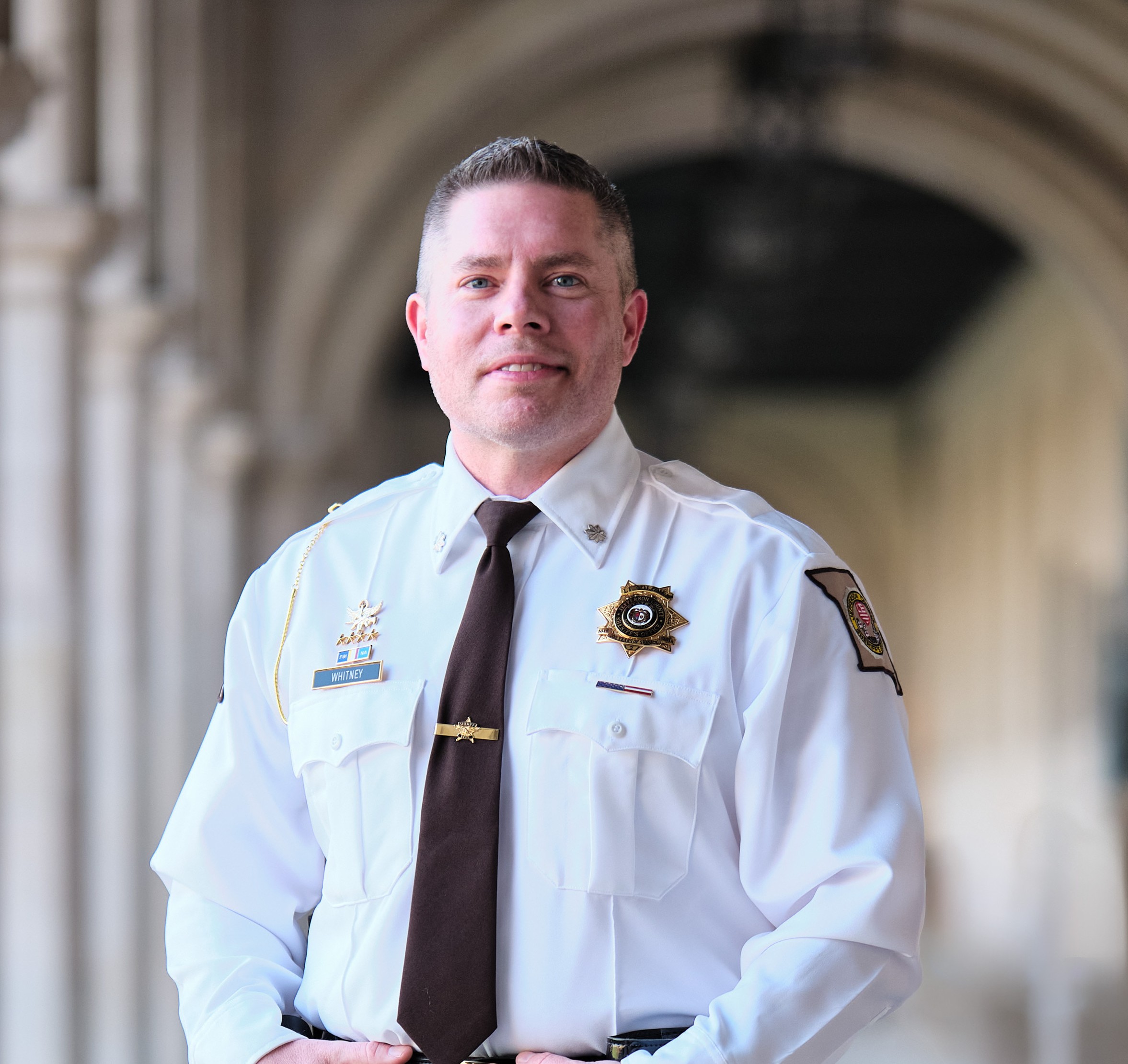
Jefferson County Executive candidate Tim Whitney was recently invited to a local political club meeting to share information about his background, explain why he is seeking the office and participate in an open forum with those in attendance.
The questions covered everything from county growth and economic development to data centers, infrastructure, transparency and public spending. Whitney did not approach every issue with a rehearsed yes-or-no answer. Instead, he regularly returned to a leadership philosophy built around gathering facts, involving residents and making decisions that will remain responsible long after a single term has ended.
That willingness to listen, paired with nearly 25 years of leadership experience in Jefferson County government, was central to the case Whitney made for his candidacy.
Whitney currently serves as undersheriff and chief financial officer for the Jefferson County Sheriff’s Office. In that role, he helps oversee the daily operations of an agency with more than 250 employees, a county jail and an annual budget exceeding $30 million.
His career began much earlier, however, with a childhood ambition to become a Jefferson County deputy.
Born and raised in the county, Whitney grew up in House Springs and attended Northwest High School. After graduating from high school, Whitney entered the Jefferson College Law Enforcement Academy. Before he had completed the program, Sheriff Boyer took a chance on the young recruit and hired him, allowing Whitney to begin his career immediately after graduating from the academy.
He went on to serve in narcotics investigations, undercover work, command the countywide drug task force, and lead the Sheriff’s Office SWAT team. He was promoted into leadership roles while still relatively young, often supervising people with more years of experience than he had.
Those assignments, Whitney said, required him to learn how to lead different personalities and remain composed when decisions carried serious consequences.
“I quite literally had to make decisions and lead when bullets were flying,” Whitney said. “Whenever decisions mattered, lives were in the balance.”
While most county government decisions do not take place under those conditions, Whitney suggested the experience taught him to remain calm, evaluate the information available and accept responsibility for the outcome.
He was appointed undersheriff and chief financial officer in 2017. Along the way, he earned a bachelor’s degree in human resource management and a master’s degree in public administration. He also attended the FBI National Academy in Quantico, Virginia, and completed additional postgraduate coursework in organizational leadership through the University of Virginia.
Whitney said he pursued that education because experience alone was not enough. As his responsibilities grew, he wanted a deeper understanding of government administration, finances and the challenges involved in leading a large organization.
Prepared to Listen Before Deciding
During the question-and-answer portion of the meeting, Whitney demonstrated a willingness to engage with difficult or complicated subjects without pretending to know details that had not yet been made available.
“I believe the county executive’s role is to bring the factual information to the community as soon as they can,” Whitney said, “allow the community to be part of the discussion, allow the community to be part of the decision that’s made.”
Whitney acknowledged that an open process could lead either to support for a project or to the conclusion that it does not fit the community. He said strong leadership means inviting residents to the table, listening carefully to what they have to say, and then using the facts, the county’s long-term goals and the needs of the community to make a responsible decision. His approach suggested that he is neither afraid of difficult conversations nor hesitant to exercise the authority of the office once the discussion is complete.
“You may have a yes, you may have a no,” he said, “but the community is largely going to dictate that.”
That answer reflected a broader theme throughout Whitney’s presentation. He did not describe leadership as entering the county executive’s office with every conclusion already reached. He described it as creating an informed process, listening to people with different concerns, and then being prepared to make a decision.
“If there’s one thing I’ve learned in my career,” Whitney said, “it was that all of us are smarter than any one of us.”
Leading Through Growth
Whitney believes the next four years will be especially important for Jefferson County as development pressure moves farther into the region.
He was clear that growth itself is not necessarily harmful. New businesses, jobs and services can improve a community. But growth that happens without adequate planning can strain roads, public safety and other essential services.
“Growth can be a very good thing for a community,” Whitney said. “What isn’t good is poorly planned growth.”
Whitney said county leaders should be more proactive about infrastructure, considering what a development will require before a project is approved rather than attempting to solve every problem afterward.
He also emphasized that Jefferson County should not simply copy the growth patterns of St. Louis or St. Charles counties.
“We want to be unique to our character,” Whitney said. “Everybody in this room has a reason they have chosen to live in Jefferson County.”
That character is not identical across the county. During the discussion, a resident emphasized that the needs and expectations of communities in western Jefferson County can differ significantly from those in more developed areas.
Whitney agreed, pointing to his experience growing up along the Highway 30 corridor, living in other portions of the county and serving residents throughout Jefferson County during his law enforcement career.
Each area has its own priorities, he said, and county leadership must respect those differences rather than assuming one development approach will work everywhere.
Experience Managing People and Public Money
Whitney’s experience with people may be one of the clearest connections between his current position and the office he is seeking.
The county executive is responsible not only for policy direction but also for the operation of county government and its employees. Whitney has spent much of his career leading teams, resolving conflicts and managing people whose skills and personalities may differ significantly.
“You’re never going to get all eight adults to agree on everything,” Whitney said while discussing the relationship between the county executive and County Council. “It’s how we work through those conflicts. It’s how we work together to accomplish things.”
He said the county executive should help lead those conversations, maintain working relationships and keep government moving even when disagreements occur.
Whitney also spoke about financial responsibility, explaining his approach in practical terms and connecting his experience managing public funds to the decisions a county executive must make.
His approach is to look beyond whether the county can afford something today. Before committing to a new expense, Whitney said he examines whether it can remain sustainable through lower revenues, rising healthcare expenses and other future pressures.
He described that process as a financial “stress test.”
“My belief is that you have a responsibility to make decisions that are good, not only for you and your term,” Whitney said, “but future terms as well.”
That long-range view would also shape how he approached major county needs, including infrastructure and future courthouse or jail projects. Whitney said he would support only plans designed to solve problems for generations rather than temporarily postponing them.
Transparency and Accountability
Whitney identified transparency as one of his leading priorities, but he described it as more than making records available after decisions have been made.
Transparency begins with proactive communication, he said. Residents should learn about proposed road projects, developments and other major decisions early enough to provide meaningful input.
“The earlier we introduce the public to things that are happening and allow them to not just hear it, but actually weigh in and be part of those conversations, is going to be incredibly important,” Whitney said.
It also means acknowledging mistakes.
Whitney said no leader can promise that every decision will be correct or universally supported. What a leader can promise is to explain the decision, accept responsibility and tell residents how a mistake will be corrected.
“The buck stops here,” Whitney said. “If we mess up on a highway project, even if I never put a shovel on the ground, I own responsibility for that.”
Whitney did not present himself as the loudest voice in the room. His presentation instead reflected steady confidence built through years of experience managing people, public finances and difficult situations.
He listened carefully to questions, answered directly when he had the information and resisted offering certainty when more facts were needed.
Whitney said the county executive’s office requires someone who understands finance, personnel, policy and the day-to-day realities of government.
“It’s not an entry-level position,” Whitney said.
His argument to voters was that his career has already required him to develop those skills — and that his knowledge of Jefferson County, combined with a willingness to listen and show up, has prepared him to apply them on behalf of the entire county.