


Pevely Residents Press for Action on Parking and Emergency Access
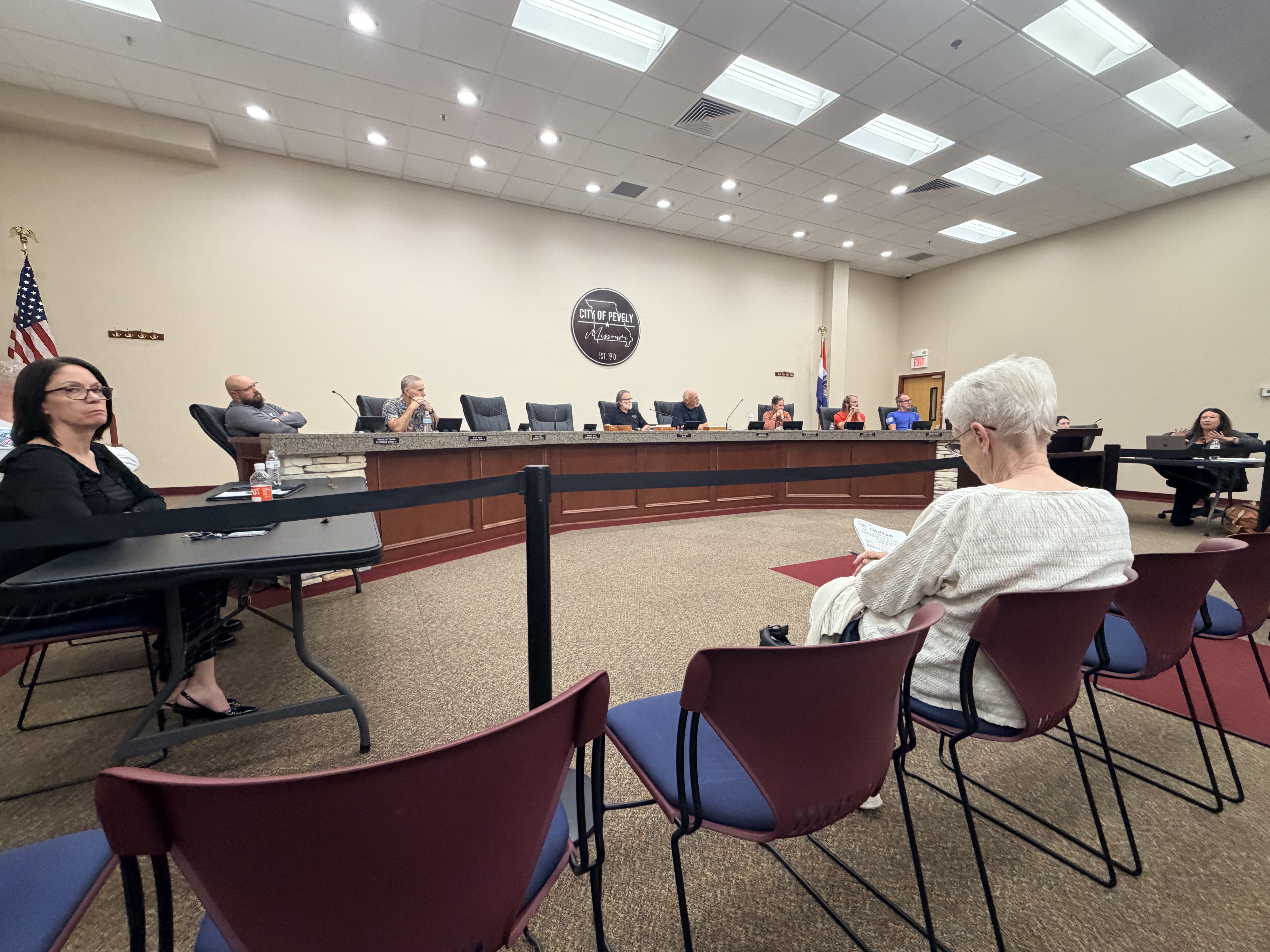
Repeated fire hydrant complaints prompt enforcement discussion as aldermen consider parking restrictions and the future of subdivision street islands.
By The Jefferson Review
PEVELY — Concerns about parked vehicles, fire hydrant access and whether emergency equipment can navigate around subdivision street islands dominated the Pevely Board of Aldermen’s Oct. 5 meeting.
Residents urged city officials to address recurring parking problems in the Abbey subdivision area, while also asking for a clearer plan and more communication before any new parking signs are installed.
Officials discussed enforcement of existing restrictions and possible removal of street islands. No new parking restrictions or island removal plan was formally approved during the meeting.
Residents Seek a Clear Parking Plan
During public comments, James Collier questioned how the city would approach potential parking restrictions. He asked whether signs would apply throughout the development or only in certain locations, whether parking would be restricted on one side of a street, and how the city would keep access clear around islands.
Collier said the size of fire trucks and other emergency vehicles needed to be considered. He also asked for more consultation with subdivision trustees before the city moved forward.
A city official explained that the agenda item followed repeated concerns from a resident and was intended to begin a public discussion.
“So we have no plan other than to just discuss it,” the official said.
Larry Womack also raised questions about the relationship between homeowners association covenants and city regulations. Citing a provision of the city code, he argued that more restrictive HOA covenants should apply.
Collier offered a different view of the city’s authority, saying the streets had been transferred to city ownership. The discussion did not produce a formal resolution of the disagreement over HOA rules and municipal authority.
Resident Says Repeated Hydrant Complaints Have Gone Unresolved
The most extensive discussion of parking enforcement centered on a resident who told aldermen that a lawn care contractor repeatedly parked a truck, trailer and equipment near a fire hydrant in the Abbey subdivision area.
According to the resident, the contractor typically works there on Wednesdays, with the parking situation lasting approximately two and a half to three hours. He said he had documented incidents through photographs, measurements and repeated calls to the city.
His concerns included both the placement of the truck and trailer and equipment being unloaded or left near the hydrant. On one occasion, he alleged, a commercial mower remained directly in front of the hydrant for approximately an hour and a half.
The mayor also raised concerns about whether emergency vehicles could get through the area when vehicles were parked beside a street island. The discussion connected the resident’s specific hydrant complaint with the broader question of how much room emergency crews have to maneuver.
Disagreement Over How Clearance Is Measured
A central point of disagreement was how to measure the 15-foot clearance discussed during the meeting.
One participant said previous measurements had indicated that the contractor was parked within the applicable requirements. The resident disputed that conclusion, arguing that the measurement should begin at the point on the street perpendicular to the hydrant and extend 15 feet in each direction, rather than being measured directly from the hydrant to the vehicle.
He described that as his interpretation of the requirement and acknowledged that he was an engineer, not an attorney.
To document his concerns, he said he used his grandchildren’s chalk to mark the location and distances along the street. He also alleged that lowering the trailer’s loading gate extended equipment approximately four feet into the area he believed needed to remain clear.
The discussion did not establish a definitive legal interpretation of the measurement requirement or resolve whether each reported incident constituted a violation.
Resident Questions the Response to Earlier Calls
The resident told the board that officers had previously visited the location and spoken with the contractor, but he believed the problem continued.
He described one encounter in which an officer spent approximately 35 to 40 minutes speaking with the contractor, who, according to the resident, continued working afterward.
The resident also alleged that during his last call in March, a dispatcher declined to send an officer and characterized his repeated complaints as harassment. He said that response led him to stop reporting the incidents by phone and instead bring the matter to the board.
That account was presented by the resident during the meeting. The transcript does not include a response from the dispatcher or the contractor.
The resident emphasized that he wanted the city to address what he viewed as a recurring safety and enforcement problem.
“Right is right. Period,” he told the board.
Officials Discuss Citations and a Stop-Work Order
Board members and city officials discussed several possible responses, including sending an officer or code enforcement employee to observe the situation when the contractor returned.
One official suggested that the resident submit a formal police complaint with photographs, dates and times so the city could evaluate whether citations were warranted for documented incidents.
The mayor discussed having code enforcement respond on a Wednesday and raised a stop-work order as another possible enforcement measure. Another official suggested pursuing both a citation and a stop-work order.
The discussion also raised questions about whether the contractor held the required city license. One board member proposed a certified letter and consideration of consequences for future licensing if violations continued.
After initially discussing several people the resident could contact, officials identified the police chief as the point person.
“Call the chief. He’ll be the point person on this issue,” an official said.
The discussion ended with a designated contact and consideration of a direct enforcement response, but without a final determination on the disputed measurements or a recorded resolution of the resident’s complaint.
Street Islands Remain Under Review
The parking discussion also raised a broader question: whether street islands should remain in place where they limit room for vehicles to pass.
The mayor expressed concern about emergency access when vehicles are parked beside an island. Officials discussed coordinating possible island removal with street work and obtaining additional resident feedback.
Collier said an informal survey had been conducted on Jackson Way. The discussion indicated that most residents surveyed there favored removal, but it did not establish the preferences of the entire subdivision area.
One board member questioned whether safety concerns should guide the decision regardless of residents’ preferences. Another official suggested that decisions about parking should follow a clearer determination of what would happen to the islands.
No removal plan was formally approved during the meeting.
Burning Complaint and Financial Reports Also Raised
Later in the meeting, a board member raised a resident’s concern about burning at a property.
The mayor said enforcement staff had intervened and that the person conducting the burn did not have a permit. Officials also discussed consultation with the Missouri Department of Natural Resources about whether additional equipment would be needed for the burning operation.
Questions remained about whether a permit had previously been issued or represented as having been issued. The mayor said the city would seek clarification.
A board member also requested detailed income and expense reports for several city activities and funds, including animal control. The discussion clarified that the request included transaction-level information showing checks written during the year.
Staff said compiling that detail would take longer than a couple of days. The mayor asked that the reports be shared with the full board.
Stay connected to what’s happening in Jefferson County
The Jefferson Review delivers the local government decisions, development updates, and community stories shaping our county every Thursday and Sunday.
Don’t miss what your neighbors are talking about.
Stay connected to what’s happening in Jefferson County.
The Jefferson Review delivers the local government decisions, development updates, and community stories shaping our county every Thursday and Sunday.
Don’t miss what your neighbors are talking about.