


Dr. Austin Schwent Brings Psychology Into the Field With Jefferson County Crisis Team
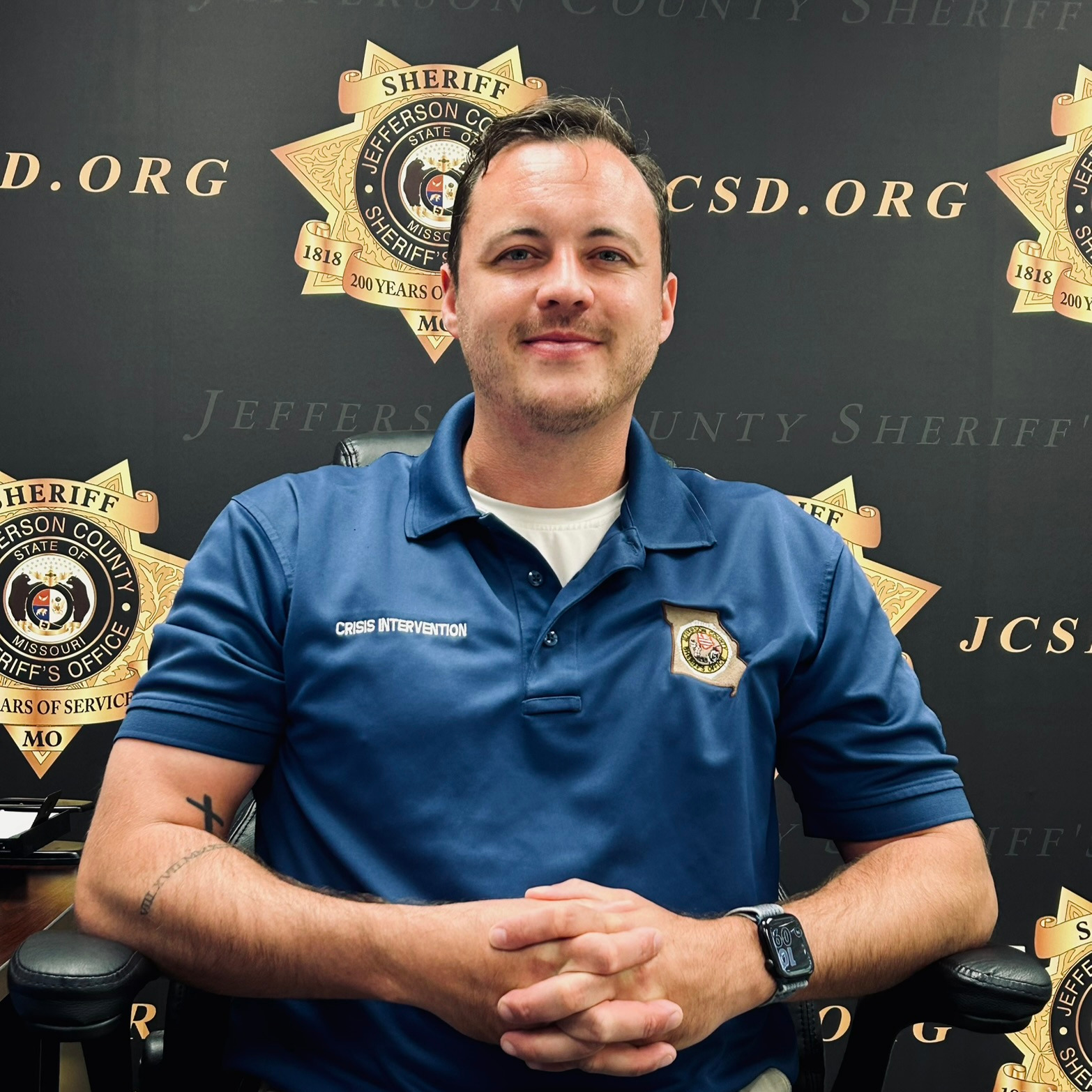
Dr. Austin Schwent serves as a co-responder and crisis negotiator with the Jefferson County Sheriff’s Office.
New doctoral research examines how Jefferson County’s co-responder model helps deputies handle mental health and behavioral crisis calls.
By The Jefferson Review Staff
When Jefferson County deputies respond to someone experiencing a mental health crisis, Dr. Austin Schwent may arrive alongside them.
Schwent is a co-responder with the Jefferson County Sheriff’s Office Crisis Intervention Unit. He is also a member of the agency’s Crisis Negotiation Team. His work combines psychology, public safety, and crisis response.
Schwent recently earned his Doctorate in Psychology from Liberty University. He specializes in forensic psychology, which brings behavioral science into criminal and civil matters.
“My objective has always been to translate behavioral science into practical strategies that work in the field,” Schwent said. “I am honored to have contributed to the growth of our Crisis Intervention Team.”
A Career Inspired by Behavioral Science
Schwent’s interest in forensic psychology began while he was an undergraduate student. He read Mindhunter, a book about the early use of behavioral science and criminal profiling within the FBI.
The book helped him decide what he wanted to do with his career.
“I was like, ‘I want to be a negotiator, and I want to go as far as I can in forensic psychology,’” Schwent told The Jefferson Review. “I set my mind to it, and I actually did it.”
Forensic psychology can be used in many different areas. Schwent assists with mental health calls, substance-related calls, critical incidents, and situations involving victims. He also works with the courts, provides testimony, and hopes to become more involved with cold cases through the Sheriff’s Office Detective Bureau.
However, much of his daily work happens in the field.
Schwent prefers to arrive at crisis calls at the same time as deputies. This allows him to begin helping before the situation becomes more serious.
He works with deputies to assess the situation, speak with the person in crisis, and decide on the safest next step. He may also assist with hospital paperwork, affidavits, and police reports.
His presence can be especially helpful when deputies encounter someone with a serious mental illness or behavioral condition.
“These are really complex scenes at times,” Schwent said. “Somebody with schizophrenia who has a tendency for maybe some violent outbursts, that can be hard to navigate.”
Schwent said having a mental health professional on the scene can help calm the person in crisis. It can also give deputies and family members greater confidence during a difficult situation.
“The families and the individuals being helped really appreciate it,” Schwent said. “They see that the Sheriff’s Office cares.”
Building Trust During a Crisis
Schwent recalled one call involving a young person with a serious mental illness who was accused of committing a violent crime. The person became frightened and barricaded himself inside a home.
Deputies needed to bring him outside safely.
Schwent, fellow co-responder Josh Fowler, crisis negotiators, and the watch commander worked together at the scene. Several people attempted to speak with the individual, but he did not respond at first.
Schwent and another negotiator eventually began talking to him through a window.
Using his education and experience, Schwent slowly gained the person’s trust. The individual then agreed to leave the home peacefully.
“It was a beautiful resolution to a tough scene,” Schwent said.
The Sheriff’s Office also recently reported another call involving a Jefferson County resident with cognitive impairments who was in crisis. Schwent and other crisis negotiators helped bring the call to a peaceful end. According to the department, their work helped prevent a situation in which force might otherwise have been used.
A Co-Responder Model Unique to the Region
The Jefferson County Sheriff’s Office says its co-responder program is the only agency-staffed and operated model of its kind in the St. Louis region.
Some law enforcement agencies work with outside behavioral health organizations. Jefferson County’s co-responders are employed by the Sheriff’s Office.
They follow the same policies and command structure as deputies. They also work with deputies each day, which Schwent believes builds trust.
“The deputies love it,” he said. “That day-to-day working together has been very beneficial to everything we’re doing.”
Sheriff Dave Marshak said Schwent’s education will make the Crisis Intervention Unit even stronger.
“Austin’s expertise will strengthen the work of our Crisis Intervention Team as we continue to expand our ability to respond to individuals experiencing a mental health or behavioral crisis,” Marshak said.
Marshak said the investment gives deputies more knowledge and resources when facing some of the most challenging calls they receive.
Studying the Jefferson County Model
Schwent spent two years completing his doctoral dissertation. It is titled “Law Enforcement Perceptions of an Integrated Co-Responder Model: A Qualitative Case Study at the Jefferson County Sheriff’s Office.”
According to Schwent and the Sheriff’s Office, it was the first study of its kind to gather information from a law enforcement agency using an integrated co-responder model.
Schwent chose the topic because he found little scientific research about programs like Jefferson County’s.
“These co-responder models are so rare,” he said. “I wanted to contribute to the scientific literature and get our model out there to the world a little bit, too.”
Because Schwent works for the agency he studied, he took steps to protect the research process. A third-party administrator sent the study to employees. The participating deputies remained anonymous, and they were not told that Schwent had sent the questionnaire.
The study focused on the views of commissioned members of the Jefferson County Sheriff’s Office who chose to participate.
Five major themes came from their responses.
Deputies described co-responders as a valuable resource. They said the program helped with communication, de-escalation, cooperation, and crisis outcomes. They also reported increased trust because the co-responders are part of the same agency and follow the same policies.
One concern involved staffing and coverage. Co-responders are not always available overnight or on weekends. Schwent said that concern also showed how much deputies value the program. Many wanted greater access to co-responders.
The deputies also offered advice for other law enforcement agencies that may want to begin similar programs. They said agencies should consider call volume, department size, staffing, and cost.
Schwent said his research does not provide one plan that will work for every law enforcement agency. However, it does show what is working in Jefferson County and what could be improved.
A Growing Need Across Jefferson County
The Crisis Intervention Unit’s workload has grown quickly.
Schwent said the unit worked about 750 cases during all of 2025. By the end of August 2026, the unit had already handled approximately 760 cases.
The team is on pace to work about 1,000 cases this year.
As demand grows, the Sheriff’s Office is investing more in the program. Fowler recently became the unit’s third member, giving the team more ability to serve Jefferson County residents.
Schwent said earning his doctorate does not change his main goal. He plans to continue helping residents, supporting deputies, and building trust throughout the county.
“We’re just going to keep doing what we’re doing,” Schwent said. “For the past two years, we’ve been giving the county and the residents our very best.”
Stay connected to what’s happening in Jefferson County
The Jefferson Review delivers the local government decisions, development updates, and community stories shaping our county every Monday and Thursday.
Don’t miss what your neighbors are talking about.