


Councilman Brad Cary Pushes Arnold to Modernize Building Codes and Cut Red Tape
From roof permits to carports, concrete siding rules and gravel parking pads, Cary urged the city to take a more practical look at regulations affecting Arnold homeowners.
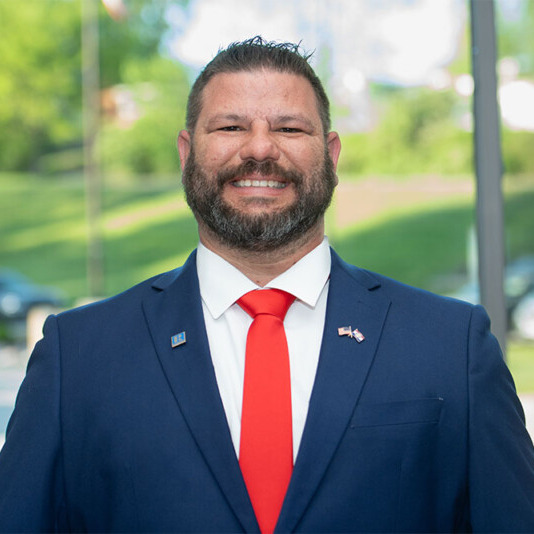
Councilman Brad Cary
By The Jefferson Review
Arnold Councilman Brad Cary is pushing the city to take a hard look at its building and zoning codes, arguing that some of the rules on the books may be outdated, overly burdensome, or out of step with the realities of Arnold’s older neighborhoods.
During a recent Arnold City Council work session, city staff began with a discussion on residential roofing permits, but the conversation quickly widened into a broader review of building code and zoning issues. Cary emerged as one of the leading voices calling for the city to modernize its approach, simplify rules for residents, and remove unnecessary barriers where possible.
The roofing discussion centered on Arnold’s current permit requirements for residential roof work. Staff explained that Arnold has been stricter than many surrounding communities, especially with a rule that treated a relatively small amount of roofing work as a threshold for additional regulation. The city has also faced practical enforcement problems, since a roof can often be replaced in a single day or over a weekend.
Cary questioned whether the city should continue requiring permits for ordinary roof replacements if the process is difficult to monitor and if the key safety standards could instead be written directly into the building code.
The proposed change would reduce the city’s roofing permit requirements. A typical shingle roof replacement would no longer require the same level of city permitting, while permits would still be required for more significant work, such as replacing 25 percent or more of the roof sheathing or decking.
The larger point, Cary suggested, was not to eliminate standards, but to make them more practical.
That theme carried into the rest of the work session.
After the roofing discussion, Cary brought forward several other code issues, including gutter discharge rules, exposed concrete requirements on new homes, carports, gravel driveways and rooftop signs. When the discussion moved to those additional topics, Cary made clear that these were issues he had presented for review.
One issue involved gutter discharge requirements. Cary noted that the city’s current rules may make some older homes technically nonconforming, especially in neighborhoods with tight lots, duplexes, triplexes or homes built close to property lines. He pointed out that in some cases, gutters are located so close to property lines that strict compliance may be impossible without additional exemptions.
Other council members agreed that stormwater remains a serious issue in Arnold, but the conversation focused on finding a “happy medium” between preventing runoff problems for neighbors and avoiding rules that older properties cannot reasonably meet.
Cary also challenged a rule involving exposed concrete on new residential construction. Under the current standard discussed at the meeting, plain concrete finish cannot be exposed beyond certain limits on front, side and rear facades. Cary argued that requiring siding to be extended down over concrete on walkout basements or similar homes can add unnecessary cost and may not make sense from a construction standpoint.
He said the requirement could force homeowners to spend thousands of extra dollars on siding when that money could be used for other improvements to the home. Several council members appeared to agree that the decision should be left to homeowners rather than mandated by city code.
Carports were another major topic. Arnold’s current rules generally prohibit new carports in most residential districts unless they already exist as nonconforming structures. Cary and others questioned whether that makes sense in older neighborhoods where lots may be too small for garages.
The discussion touched on residents who may want a practical way to protect their vehicles from hail, storms and weather but do not have the space or resources to build a full garage. Cary also raised concerns about residents who had carports damaged or destroyed and then faced difficulty replacing them under the existing code.
Rather than opening the door to every type of structure, council members discussed studying the issue further, including possible distinctions between attached carports and standalone metal structures. Staff said they could research how surrounding communities handle carports and bring more information back for future discussion.
Cary also raised questions about gravel parking areas and secondary driveways. The city’s current rules generally require parking areas and driveways to be paved. Cary pointed to situations where residents on larger properties may want to park a boat, trailer or other vehicle on a gravel pad rather than pour concrete far back on their land.
The issue is complicated because Arnold has previously tried to move away from gravel driveways, especially where gravel can track onto public streets, create dust or become mud. But council members also acknowledged that one-size-fits-all rules may not work for long driveways, large lots, private roads or older properties. Left unsaid was the fact that the city also has many properties with gravel lots and roads contrary to their own ordinances.
City staff said clearer ordinance language would be helpful so enforcement does not depend on informal exceptions or the judgment of individual inspectors. That approach appeared to match the broader direction of the discussion: make the rules clear, fair and easier for both residents and staff to follow.
The final item raised was rooftop signage. Current city rules prohibit new rooftop signs, although some older signs remain as nonconforming uses. Cary questioned why the city prohibits them entirely, noting that in some cases, roof-mounted signs could reduce the need for additional freestanding signs along the road.
That opened the door to a broader discussion about Arnold’s sign ordinance, with staff noting that the city is already looking at a larger review of its signage rules.
No final votes were taken during the work session, and several items will require additional research before any formal ordinance changes move forward. But the discussion made clear that Cary wants Arnold to rethink parts of its code with a more practical, resident-focused approach.
For Cary, the issue is not about removing all rules. It is about asking whether the rules Arnold has today still make sense for the people who have to live under them.
In several areas, council members and staff appeared open to the same question.
As Arnold continues to review its building and zoning standards, residents could eventually see changes that make roof repairs simpler, allow more flexibility for older neighborhoods, reduce unnecessary construction costs and bring city rules closer to how people actually use their homes and properties.
For now, Councilman Brad Cary has put the issue squarely on the table: Arnold’s codes may need more than minor edits. They may need a modern reset.
Stay connected to what’s happening in Jefferson County.
The Jefferson Review delivers the local government decisions, development updates, and community stories shaping our county every Thursday and Sunday.
Don’t miss what your neighbors are talking about.