

Arnold City Council Moves Toward Regulating Kratom, 7-OH and Tianeptine Following Police Presentation
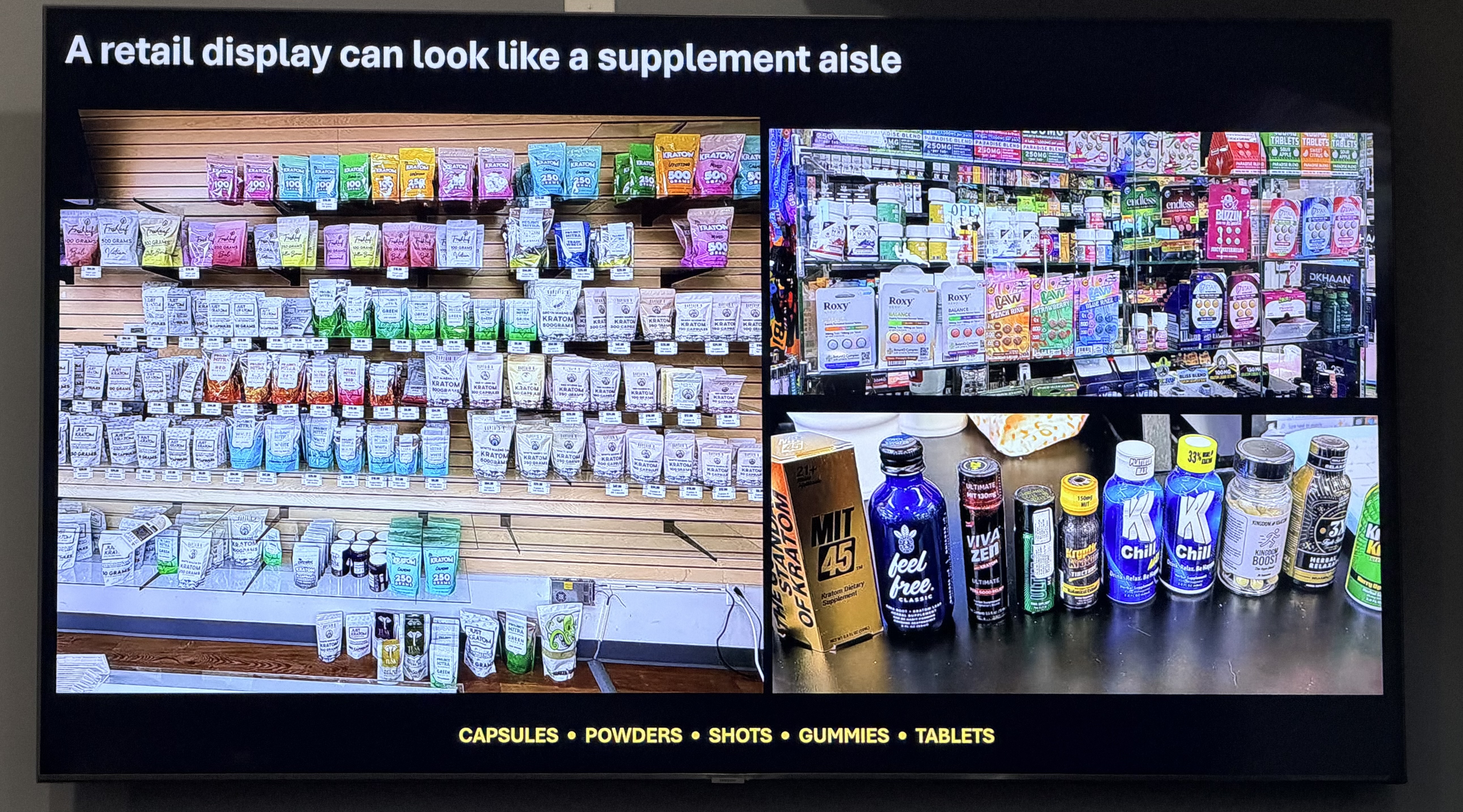
The Arnold City Council is moving toward possible new regulations on three substances sold at gas stations, smoke shops and other retail establishments after a presentation during a recent City Council work session raised concerns about addiction, public safety and access by young people.
The discussion centered on kratom, concentrated 7-hydroxymitragynine (7-OH), and tianeptine, substances that can be marketed or sold as over-the-counter products despite concerns about their potential for misuse and dependence.
Following the presentation and a discussion among council members, city officials indicated their support for addressing the issue. The council directed City Attorney Mark Bishop to move forward with developing regulatory options that could be considered for adoption at a future City Council meeting.
While no ordinance was adopted during the work session, the discussion made clear that Arnold officials intend to explore local restrictions.
Arnold Police Officer Finds Products Being Sold Locally
The presentation began with Josh Lambrich, an Arnold Police Department officer who serves as a certified DARE instructor and works in public relations and training, giving a presentation on products sold in the city of Arnold.
Lambrich explained that he began researching the substances after the police department was asked to examine what some officials have called "gas station drugs."
As part of that research, he visited local gas stations, vape shops and smoke shops to see what products were available.
He told the council that the businesses he visited were cooperative and informative, allowing him to examine products and take photographs that were later included in his presentation.
Lambrich outlined three substances of concern, explaining the differences between them and how they are sold.
Kratom: A Naturally Occurring Substance
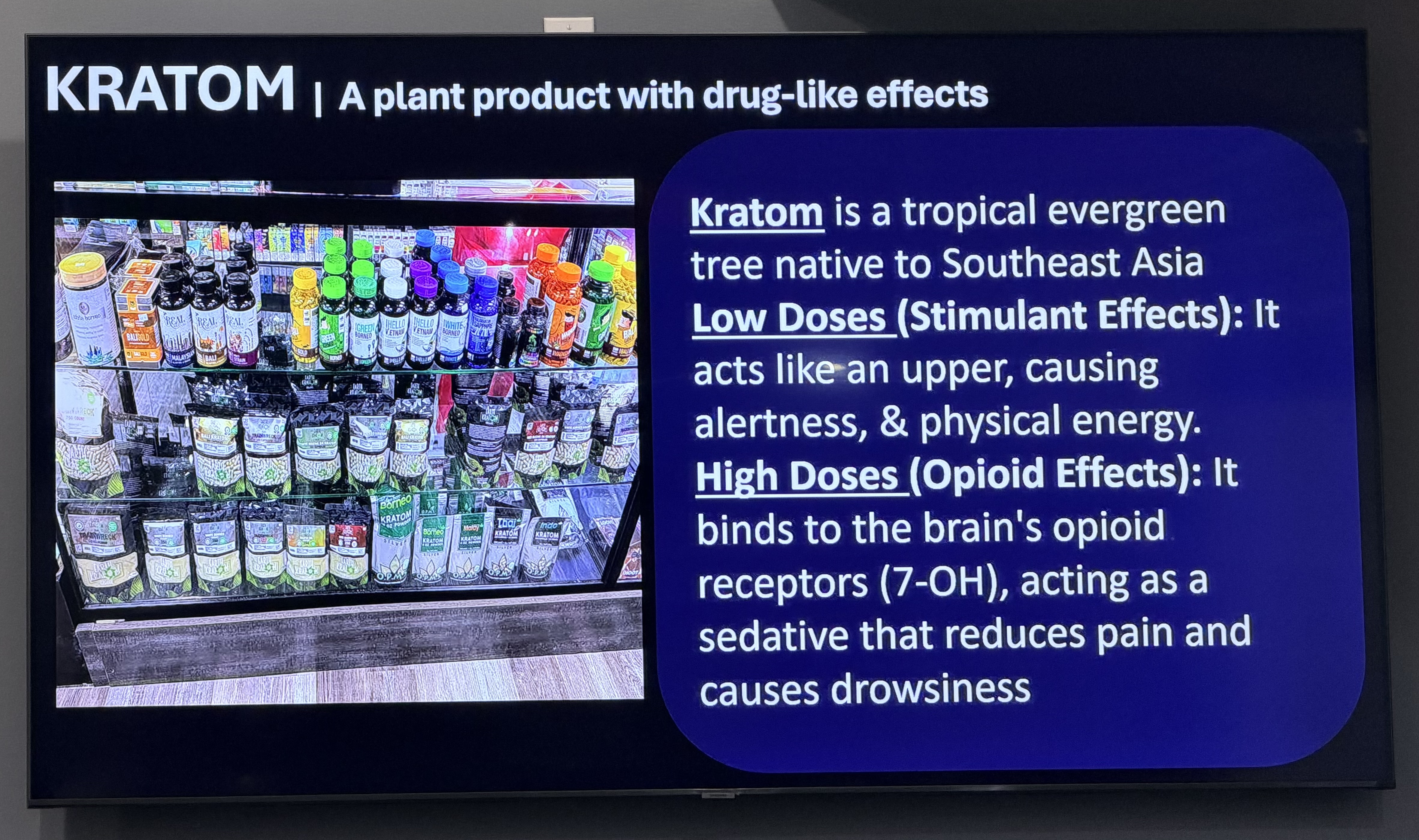
The first substance discussed was kratom, a plant native to Southeast Asia.
Kratom products are sold in several forms, including powders, capsules and beverages. The plant contains compounds that interact with opioid receptors in the body, and its effects can vary depending on the amount consumed.
Lambrich distinguished natural kratom products from concentrated or chemically altered products derived from the plant.
That distinction became important later in the discussion as council members considered whether local regulations should treat natural kratom differently from more concentrated substances.
Some Missouri municipalities, Lambrich explained, have approached regulation by restricting sales of natural kratom to individuals 21 and older while placing stronger restrictions on other products.
Concentrated 7-OH Raises Additional Concerns
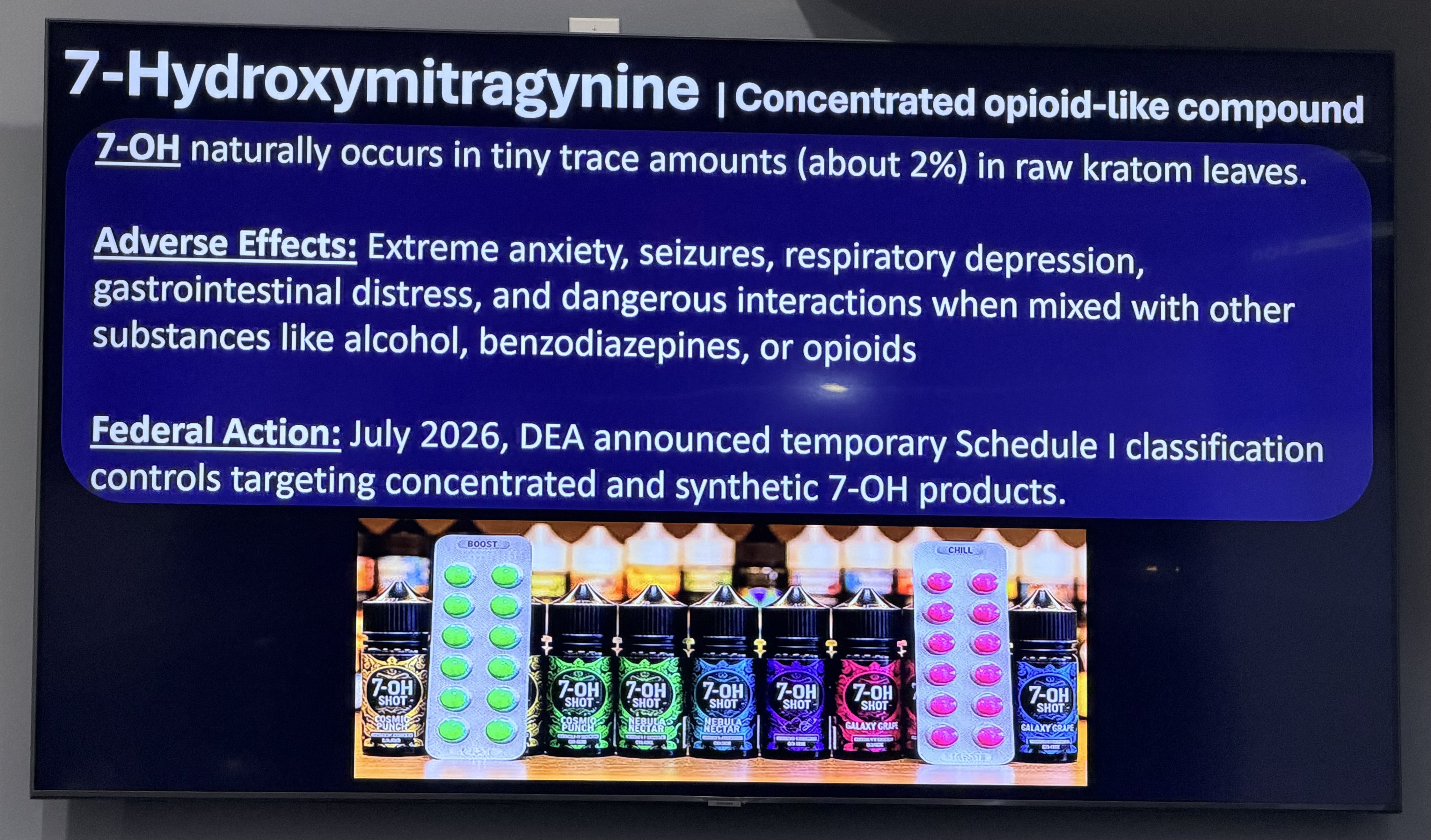
The second substance discussed was 7-hydroxymitragynine, commonly called 7-OH.
Although 7-OH occurs naturally in kratom in small amounts, manufacturers can produce products with substantially higher concentrations of the compound.
These concentrated products are marketed in forms such as tablets, shots and other consumables.
Lambrich warned that consumers may not understand the differences between traditional kratom and concentrated products, particularly when the items are sold alongside ordinary retail merchandise.
He also raised concerns about mixing these substances with alcohol, prescription medications or other drugs.
The presentation emphasized the potential for dependence and the importance of understanding what is contained in products marketed to consumers.
Tianeptine: The Substance Known as "Gas Station Heroin"
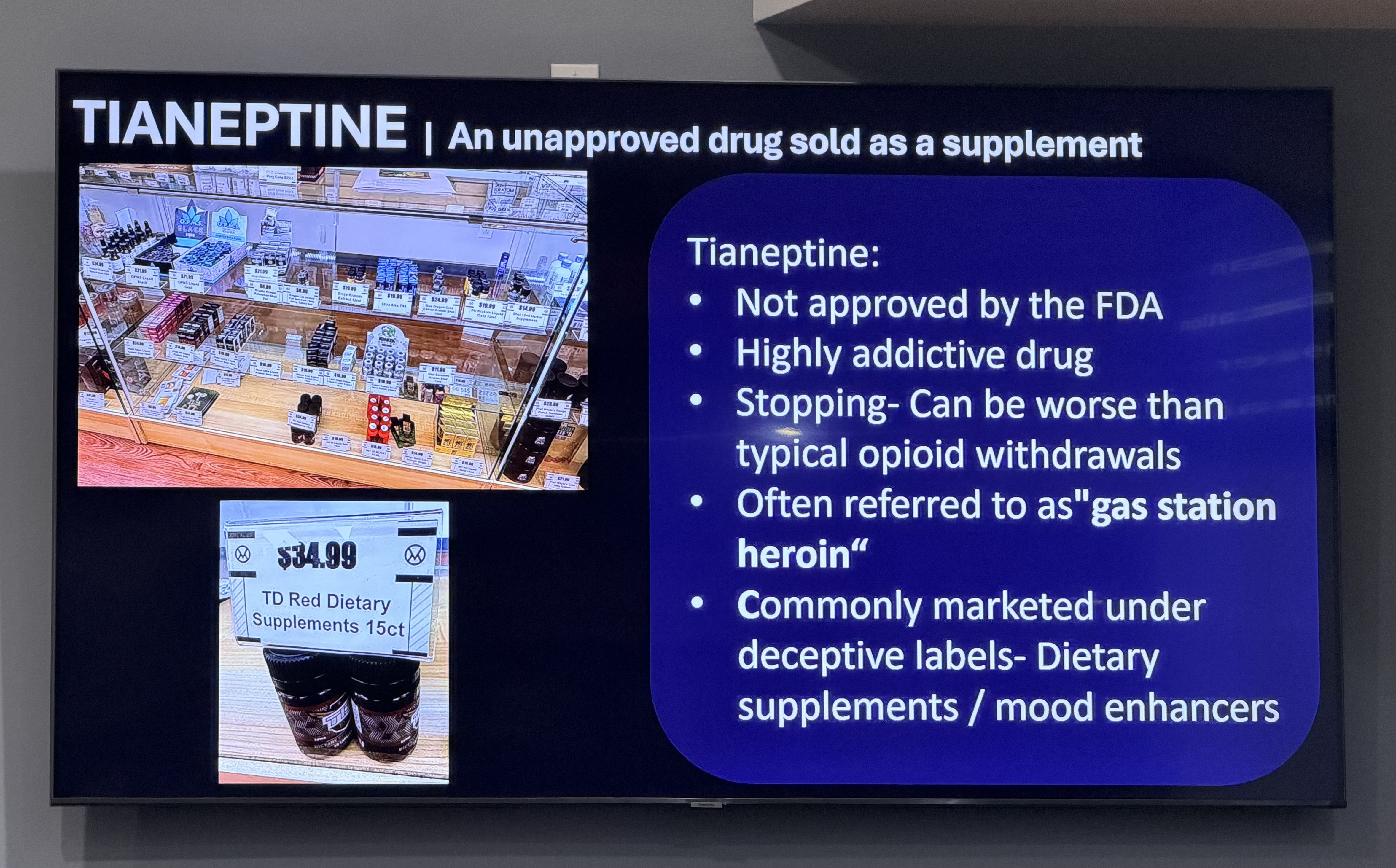
The third substance identified during the presentation was tianeptine, which is sometimes marketed under the nickname "gas station heroin."
Tianeptine is a separate substance from kratom and 7-OH. It has been used as an antidepressant in some countries, but it is not approved by the U.S. Food and Drug Administration for medical use.
Despite that lack of FDA approval, tianeptine has appeared in products sold through retail outlets, sometimes marketed as supplements or mood-enhancing products.
The substance can act on opioid receptors and has been associated with dependence, withdrawal symptoms and serious health complications.
Lambrich told the council that he had located products of concern at businesses in Arnold and warned that customers may purchase them without understanding the risks.
His presentation raised questions about whether the city should allow certain products to remain available for unrestricted retail sale.
A Father's Personal Story Brings the Discussion Home
Following Lambrich's presentation, Art Dino, co-founder and vice president of ACPD in the St. Louis area, addressed the council.
The organization is named for Dino's son, Austin Christopher Paul Dino, who died from an overdose at age 19.
Dino shared the story of his son's struggle with addiction and the difficulty his family experienced while attempting to find treatment.
He recalled his son telling him, "Dad, I can't stop."
After losing his son, Dino helped establish ACPD to assist individuals and families affected by substance use disorders.
During the presentation, Dino described the organization's work helping individuals enter treatment and its partnership with the Arnold Police Department. They work with individuals through out the surrounding counties and cities.
According to Dino, that partnership has helped 15 individuals specifically from Arnold enter recovery programs over the past several months alone. He also said the organization was working to assist additional residents.
Those figures were presented by Dino as part of his organization's experience.
Council Members Express Support for Taking Action
After the presentations, the discussion shifted from education to what the City of Arnold could do through local ordinances.
Several council members expressed support for placing guidelines or restrictions on the sale of these substances.
The conversation included concerns about access by young people, the potential for addiction and the responsibilities of businesses selling the products.
The council's discussion reflected broad support among those speaking for beginning the regulatory process, although members had not yet settled on the specific restrictions they wanted.
City Attorney Asked to Prepare Regulatory Options
City Attorney Mark Bishop discussed ordinances adopted by other Missouri communities and explained several approaches Arnold could consider.
Those options included:
- Setting a minimum purchase age of 21 for natural kratom products.
- Prohibiting the sale of certain concentrated products, including 7-OH.
- Addressing other substances of concern, including tianeptine.
- Establishing labeling requirements for products sold locally.
- Creating penalties for businesses or employees that violate an ordinance.
- Considering business-license consequences for violations, subject to appropriate legal procedures.
Bishop explained that the city could look to ordinances already adopted elsewhere in Missouri rather than attempt to create an entirely new regulatory framework.
He also noted that restrictions involving business licenses would require procedures giving affected businesses an opportunity for a hearing.
During the discussion, council members were asked whether they wanted city staff and Bishop to move forward with examining potential regulations. Support was expressed for doing so.
Near the conclusion of that discussion, a council member urged Bishop to take the next step.
The direction puts Arnold on a path toward reviewing proposed regulations at a future meeting, although the exact language and scope of any ordinance remain undecided.
What Happens Next?
Arnold has not yet adopted new restrictions as a result of this work session.
The next step is for City Attorney Mark Bishop and city staff to develop options for the council to review.
Council members will then have an opportunity to consider which products should be regulated, whether age restrictions are appropriate, what enforcement provisions should apply and how the city should handle potential violations.
Any proposed ordinance would need to return through the city's legislative process before taking effect.
For now, the work session marks a shift from learning about kratom, concentrated 7-OH and tianeptine to considering what Arnold can do about their sale within city limits.
Stay Informed About Decisions Affecting Jefferson County
From proposed city ordinances to important decisions made by local governments, The Jefferson Review keeps you informed about the issues affecting your community.
Get independent local reporting delivered directly to your inbox every Sunday and Thursday morning.
Subscribe for FreeLocal News. Local Government. Your Community.